
MBBS in Hungary 2027-28 for Indian Students
Hungary offers six-year, English-taught medicine at long-established universities such as Semmelweis University in Budapest and the University of Debrecen. Here is how admission works for Indian students for the 2027-28 intake, what it costs and what to check before you apply.

Photo credits
Hungarian Parliament Building — photo by Kilyann Le Hen. Resized and compressed. Image source · CC BY 4.0.
At a glance
- Currency
- HUF
- Phone code
- +36
- Universities listed
- 2
Hungary offers six-year, English-taught medicine at long-established universities such as Semmelweis University in Budapest and the University of Debrecen. Here is how admission works for Indian students for the 2027-28 intake, what it costs and what to check before you apply.
Why Indian students choose medicine in Hungary
Hungary is one of the oldest destinations in Europe for English-taught medicine. Its leading medical universities have run English programmes for international students for decades, and they teach to European Union standards. The degree is a Doctor of Medicine (MD), which is the European equivalent of MBBS. Students from more than 100 countries study in Budapest, Debrecen, Szeged and Pécs.
Students choose Hungary for its long record in medical education, its place inside the European Union, its strong science foundation and its clinical training in university hospitals. It is more expensive than Central Asia, but often less expensive than private medical colleges in India or medicine in Western Europe.
Universities on this page
- Semmelweis University, Budapest — Hungary's oldest and largest medical university, founded in 1769. It offers General Medicine in English over 12 semesters, with an online written entrance test and an oral interview.
- University of Debrecen, Debrecen — a large public university with its own clinical centre. Its English-taught Medicine (MD) programme lasts 12 semesters. The university's official page listed tuition of USD 16,900 per year for 2025/26, plus an application fee and entrance exam fee.
How the course is structured
Medicine in Hungary is a single six-year programme of 12 semesters. The first two years cover basic sciences such as anatomy, biochemistry, physiology and cell biology. Years three to five are clinical, with rotations in internal medicine, surgery, paediatrics, obstetrics and gynaecology and other specialities. The sixth year is a practical year in hospital departments. Hungarian language is taught in the early years because you will need it to talk to patients.
Admission: entrance exam, not NEET marks alone
Hungarian universities choose students through their own entrance examination, usually in biology and chemistry or physics, with an interview that also checks your English. Some universities also offer a one-year Basic Medicine Course (foundation year) for students who need to strengthen their science. Indian students still need a qualifying NEET-UG result if they want to practise in India later.
2027-28 intake timeline for Hungary
- October 2026 – January 2027: shortlist universities, read their 2027 admission rules, and start revising biology and chemistry for the entrance test.
- January – May 2027: applications open at most Hungarian universities. Entrance exams run in several rounds, online and in person. Early rounds give more choice.
- May 2027: appear for NEET-UG 2027 (date to be announced by NTA).
- June – August 2027: accept your offer, pay the deposit to the university, and apply for the residence permit.
- September 2027: classes start.
Costs to plan for
Tuition is the largest cost and differs between universities. Ask for the official 2027-28 fee list in writing. Also plan for the application and entrance exam fees, accommodation, food, health insurance, books, residence permit fees and travel. Fees are usually charged in US dollars or euros, so the rupee cost changes with the exchange rate.
Will this degree let you practise in India?
The National Medical Commission (NMC) does not approve or list foreign universities. Your course must meet the NMC Foreign Medical Graduate Licentiate Regulations, 2021: at least 54 months of study, a 12-month internship at the same institution, teaching in English, the whole course done outside India in the same institution, and eligibility for a licence to practise in that country on the same terms as its citizens. You must also qualify NEET-UG before joining, clear the licensing exam (currently FMGE), and complete a 12-month internship in India. Ask the university to confirm these points in writing, and read the latest notices on nmc.org.in.
Hungarian medical degrees lead to licence eligibility in Hungary, and the programmes run for six years. Still, ask your university to confirm in writing how the final-year practical training meets the NMC's 12-month internship rule.
Semmelweis or Debrecen: how to compare
Both universities run long-established English programmes. Semmelweis is in Budapest, the capital, which offers city life, more international connections and higher living costs. Debrecen is Hungary's second-largest city, quieter and usually cheaper to live in, with a large campus and its own clinical centre. Compare the entrance test format, the fee for each year, the foundation-year option and the hostel or flat options before you decide.
Your 2027-28 checklist for MBBS in Hungary
- Qualify NEET-UG (2025, 2026 or 2027 result, within its three-year validity).
- Read the university's official 2027-28 admission rules, entrance test details and fee list.
- Get written confirmation of course length, internship, teaching language and licence eligibility.
- Check the latest notices on nmc.org.in about Hungary before paying anything.
- Prepare your passport, Class 10 and 12 documents and NEET scorecard, and find out which need apostille or translation.
- Plan the full budget for six years, plus 10–15% for exchange-rate changes.
- Pay fees only to the university's official bank account and keep every receipt.
NMC rules for MBBS in Hungary: read before you apply
If you want to practise medicine in India after studying in Hungary, your course must meet the NMC Foreign Medical Graduate Licentiate Regulations, 2021. These rules apply to students who joined a foreign medical course on or after 18 November 2021. The National Medical Commission (NMC) does not approve or publish a list of foreign universities. Instead, it sets conditions that your course must meet:
- The course is at least 54 months long.
- You complete a 12-month internship in the same foreign university.
- The whole course is taught in English.
- The entire course, training and internship happen outside India, at the same university. No part of it can be done in India.
- You study the subjects listed by NMC.
- You become eligible for a licence to practise medicine in Hungary, on the same terms as its own citizens.
- You finish the course within 10 years of joining.
After returning to India, you must clear the licensing exam for foreign medical graduates and complete a 12-month supervised internship in India. Today this exam is the FMGE, conducted by NBEMS. NMC plans to replace it with the National Exit Test (NExT), but as of October 2026 NExT has not started for foreign graduates.
Eligibility for MBBS in Hungary
- Class 12 with Physics, Chemistry, Biology and English, with the marks needed for MBBS admission in India (lower for reserved categories; check the NEET-UG information bulletin).
- NEET-UG qualified. NEET is compulsory for Indian students who want to practise in India after studying abroad. For foreign admission, the result is valid for three years from the date it is declared. The Supreme Court upheld this rule in 2025.
- At least 17 years old by 31 December of the admission year.
- A valid passport.
Universities may also set their own minimum marks, an entrance test or an interview. Do not trust anyone who offers MBBS admission without NEET if you want a medical career in India.
Documents usually required
- Passport
- Class 10 and Class 12 marksheets and certificates
- NEET-UG scorecard
- Passport-size photographs
- Medical fitness certificate and any tests the embassy asks for
- Admission letter and visa invitation or approval
Some documents may need translation, notarisation or apostille. Follow the exact list your university gives you.
MBBS admission process for Hungary
- Counselling: share your NEET score, Class 12 marks, budget and preferences with a counsellor.
- Shortlisting: compare course duration, teaching language in every year, clinical training, hostel and the full cost.
- NMC check: ask the university to confirm the NMC conditions in writing and read the latest notices on nmc.org.in.
- Application: submit your documents through the university's official channel.
- Admission letter: read the fee schedule and refund rules before paying.
- Visa: apply for the student visa arranged through the university.
- Travel: attend a pre-departure briefing and plan your arrival with the university.
After MBBS in Hungary
Most Indian graduates return to clear the FMGE and complete the internship in India, then practise or prepare for postgraduate entrance exams. Some take licensing exams in other countries. A foreign medical degree alone does not give you the right to practise anywhere. Read our MBBS abroad guide for the full rules.
Your MBBS journey in Hungary, year by year
- Before you leave: qualify NEET, choose the university carefully, check the NMC conditions in writing, arrange documents and visa, and join a pre-departure briefing.
- First year: settle into hostel life, learn the local language seriously, and build strong basics in anatomy, physiology and biochemistry.
- Middle years: focus on pathology, pharmacology and microbiology. Start reading Indian textbooks and solving FMGE-style questions alongside your university studies.
- Clinical years: attend every hospital posting, talk to patients in the local language, and keep a record of your clinical training.
- Final year and internship: complete the 12-month internship at your university, collect all certificates, and prepare for the licensing exam in India.
- After returning: apply for the FMGE, then the 12-month internship in India through your State Medical Council.
Common mistakes to avoid
- Choosing only by the lowest fee. A cheap course that does not meet NMC rules can cost you your career in India.
- Believing "NMC approved" claims. NMC does not approve foreign universities. Check the conditions yourself.
- Ignoring the local language. Students who do not learn it struggle in clinical years.
- Leaving FMGE preparation to the end. Start practising early.
- Paying agents in cash or to personal accounts. Pay fees only to the university's official account and keep every receipt.
- Not keeping documents. Save your syllabus, marksheets, attendance and internship certificates. You will need them in India.
Paying for your studies in Hungary
Education loans
Many Indian families use an education loan for studies abroad. Banks and lenders usually ask for the admission letter, a cost estimate from the university, academic records, identity and address proof, and income documents of a co-applicant, usually a parent. Larger loans may need collateral. Interest rates, limits and repayment rules differ between lenders, so compare at least two or three offers and read the terms carefully.
Sending money abroad
Fees and living money are usually sent through a bank's foreign remittance service under the RBI's rules for education abroad. Keep the university's fee invoice and bank details ready, and always pay only to the university's official account. Never pay fees into a personal account.
Making a realistic budget
- Write down tuition for every year, not just the first year.
- Add hostel, food, transport, mobile, insurance, books and visa charges.
- Add flights home at least once a year.
- Keep 10–15% extra for exchange rate changes and emergencies.
How to prepare for the FMGE while studying in Hungary
The FMGE tests your medical knowledge as per the Indian curriculum. Many students who study abroad find it challenging, so prepare steadily through your course:
- Use standard Indian textbooks alongside your university notes, especially for clinical subjects.
- Solve multiple-choice questions regularly from your second year onwards.
- Revise subject by subject after each semester, while the topics are fresh.
- Take mock tests in the final year to build speed and confidence.
- Study in a group with other Indian students to stay motivated.
MBBS in Hungary or a private college in India?
- Cost: studying abroad is often cheaper than many private colleges in India, but compare the full cost honestly.
- Practice in India: an Indian MBBS lets you practise after internship; a foreign degree also needs the licensing exam and an internship in India.
- Patients and language: in India you train with patients who speak your language; abroad you must learn a new one.
- Experience: studying abroad builds independence and international exposure.
Discuss these points openly as a family before you decide.
Living and studying in Hungary: what to expect
Hungary at a glance for students
Hungary is in Central Europe and is a member of the European Union and the Schengen area. Its capital is Budapest, divided by the Danube river into Buda and Pest. Other university cities include Debrecen, Szeged and Pécs. The language is Hungarian and the currency is the Hungarian forint (HUF).
Hungarian medical universities have taught medicine in English to international students for decades, and their campuses have students from dozens of countries. Hungarian is not related to most European languages and is hard to learn, but medical students study it because they talk to patients during clinical years.
Weather
Hungary has cold winters, sometimes with snow, and hot summers. You will need warm clothes for winter.
Visa and residence permit
Indian students need a residence permit for study. After admission, you usually apply for a residence permit for the purpose of study, often starting with an entry visa from the Hungarian Embassy. You will need your acceptance letter, proof of accommodation, proof of funds, health insurance and passport. The university's international office guides students through the process.
Living costs and accommodation
Budapest is more expensive than Debrecen, but living costs in Hungary are lower than in Western Europe. Students live in university dormitories or rent shared flats. Plan for rent, utilities, food, transport and books.
Scholarships
The Hungarian government's Stipendium Hungaricum scholarship is open to Indian students through nomination by the Indian government. Places are limited and competitive, and each university decides which courses take part. Check the current call before you apply.
How PSP Education helps you
PSP Education has guided Indian students and parents since 1992. For MBBS in Hungary, we help you compare universities, check the rules that apply to you, prepare documents, apply before the 2027-28 deadlines and plan your visa and travel. We give honest advice, and we never promise seats, visas or jobs that no consultant can guarantee. Use the enquiry form on this page or call us to book free counselling.
FAQs
Questions on Hungary
Quick answers curated by PSP counsellors for this country.
Is NEET required for MBBS in Hungary?
Hungarian universities select students through their own entrance exams. But if you are an Indian citizen and want to practise in India, you must qualify NEET-UG before you join. NEET is required under NMC rules, not by the university.
How long is MBBS in Hungary?
Medicine in Hungary is a six-year (12-semester) programme leading to a Doctor of Medicine (MD) degree. Some students first take a one-year foundation (Basic Medicine) course.
What is the fee for MBBS in Hungary?
Fees differ by university. The University of Debrecen listed USD 16,900 per year for 2025/26 on its official page. Ask each university for its 2027-28 fee list, and add living costs, insurance and permit fees to your budget.
Do I need to learn Hungarian?
Yes. Lectures are in English, but Hungarian is taught in the early years because you need it to talk to patients during clinical training.
When should I apply for the 2027-28 intake?
Start by January 2027. Hungarian universities run entrance exams in rounds through spring and early summer, and early rounds offer more choice.
University finder
Universities in Hungary
Search the latest medical and allied programmes available for PSP students.
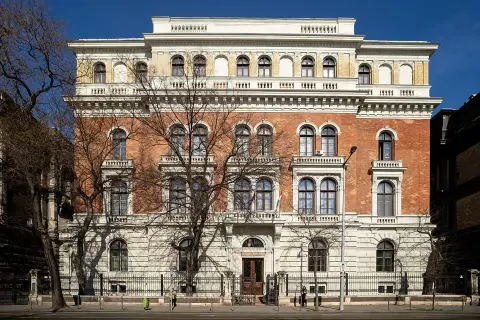
Semmelweis University
Budapest, Hungary
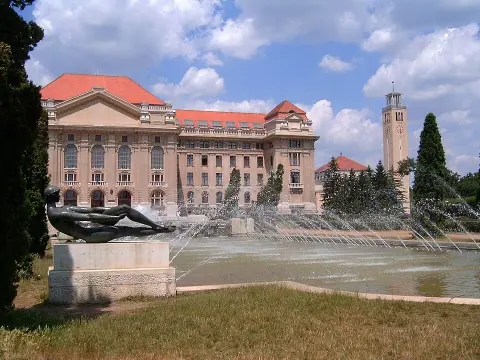
University of Debrecen
Debrecen, Hungary